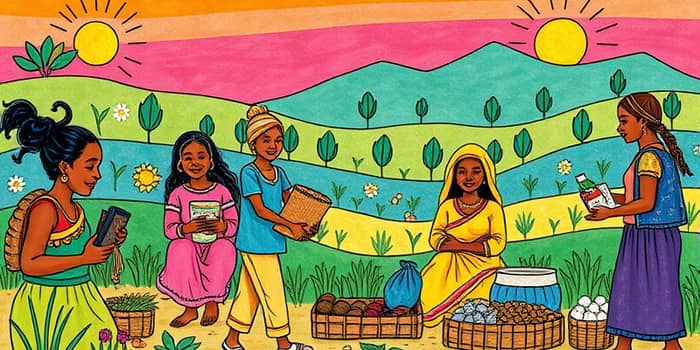
In a world where financial exclusion deepens inequality, microcredits emerge as a beacon of hope. These small, short-term loans for the underserved challenge traditional banking by empowering individuals to escape poverty through entrepreneurship and self-employment.
Originating in Bangladesh in the 1970s, microcredits were pioneered by Muhammad Yunus and the Grameen Bank. They demonstrated that even minimal capital could fuel personal initiative and drive economic independence.
Defined by the 2002 Global Microcredit Summit as tiny credits for income-generating projects, microcredits replace collateral with group support and training, fostering a more inclusive financial system.
Unlike conventional loans, microcredits focus on social impact over pure profit. They prioritize accessibility for marginalized groups, such as those without stable incomes or credit history.
Key differences include:
This approach not only provides funds but also builds skills and confidence. For example, the Grameen Bank uses a peer-lending system that encourages accountability and mutual aid.
Microcredits differ significantly from quick or mini-loans, which often have high interest rates and less social focus. Instead, they aim for sustainable poverty reduction through empowerment.
The impact of microcredits extends far beyond mere financial gain. It touches economic, social, and psychological dimensions, creating a ripple effect in communities.
For instance, studies show that microcredits enhance:
In developing countries, these loans address basic needs like food, water, and education. Kofi Annan highlighted in 2003 that inclusive financial sectors help people improve their lives.
Women are primary beneficiaries, with higher repayment rates and increased empowerment. This leads to reduced gender gaps and better family outcomes.
Microcredits adapt to different environments, from impoverished nations to developed economies. Their implementation varies based on local challenges and opportunities.
In Spain, research indicates positive effects on household income and savings. Similarly, Oikocredit's 2024 Impact Report emphasizes financial inclusion alongside sustainable agriculture and renewable energy.
Microfinance, as a broader movement, provides quality financial services to low-income households. It includes not just credit but also savings and insurance, stabilizing consumption and protecting against risks.
Ethical banking integrates social and environmental criteria into investments. It supports disadvantaged groups and the social economy, combating financial exclusion through transparency and ethical standards.
Key advantages of this approach:
Examples like Oikocredit show how microfinance can drive community resilience, focusing on pillars such as global connections and support networks.
Quantifying impact reveals significant growth and effectiveness. Global data indicates that microcredits have reached billions in poor and developing regions, with high repayment rates, especially among women.
Key studies and institutions include:
However, challenges persist. These include ensuring long-term sustainability, preventing abuses, and balancing charity with empowerment. Addressing these issues requires ongoing innovation and ethical oversight.
Future directions involve expanding global inclusion, leveraging technology for access, and integrating microcredits into broader development frameworks. The potential for transformative change remains vast, as seen in initiatives that combine financial services with education and healthcare.
For individuals and organizations looking to support or utilize microcredits, here are actionable steps:
By taking these steps, you can contribute to a more equitable world. Microcredits are not just financial tools; they are vehicles for hope and empowerment, enabling people to rewrite their stories.
In conclusion, the power of microcredits lies in their ability to transcend economics. They foster resilience, dignity, and community bonds, proving that small loans can lead to big changes. As we move forward, embracing this holistic approach can drive sustainable development and a brighter future for all.
Referencias